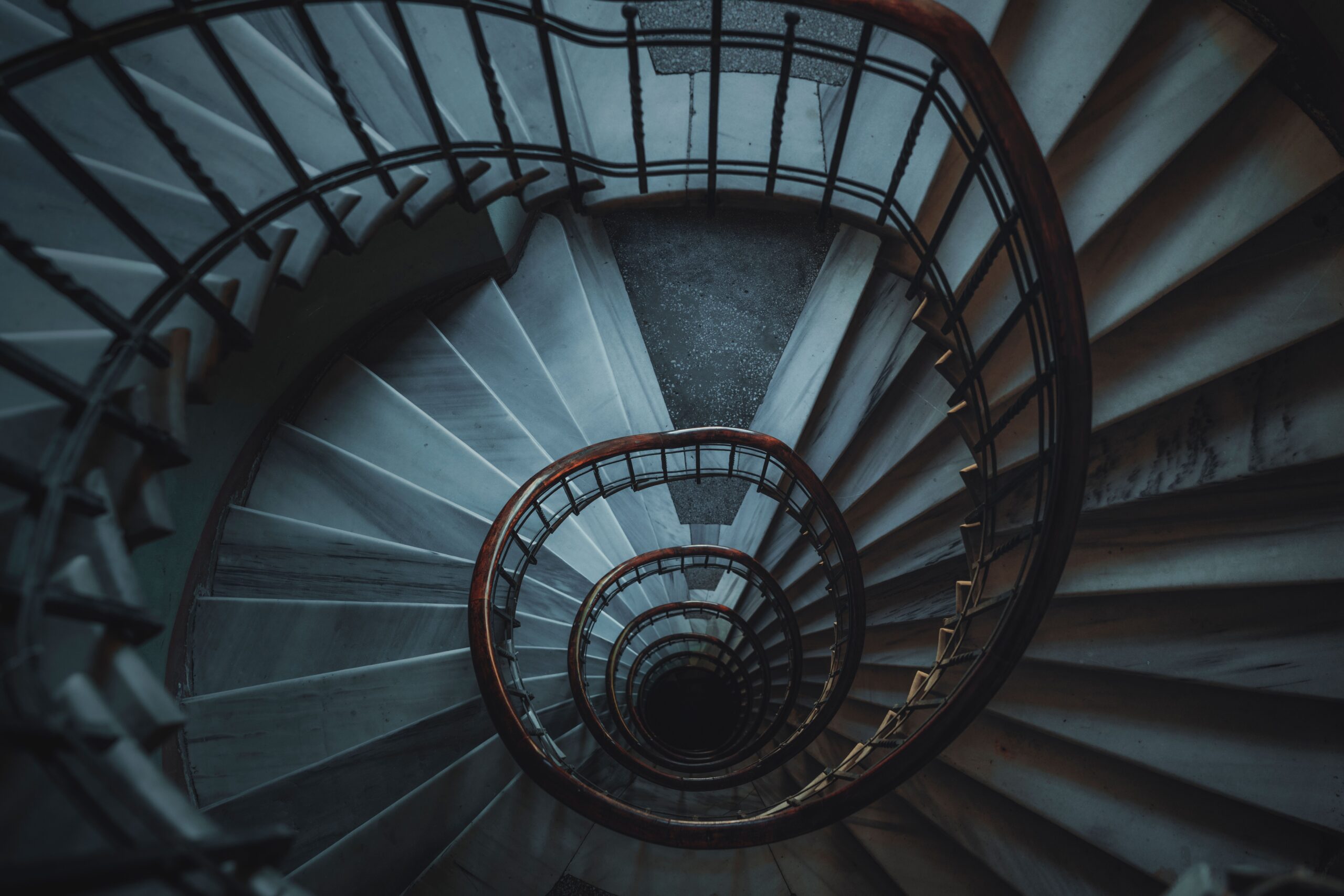
Self Education: Spring 26’ personal curriculum.
If I see one more of these getting recommended to me on my feed, I am going to lose my goddamn mind.
My morning had started with me staring at the wall. I woke up thirty minutes late, but that wasn’t what had made me stay there. There was a feeling. Something heavy. Something old. The kind of heaviness that feels less like something you carry and more like something that lives inside the walls with you.
I have nothing against these videos or wanting to built a personal curriculum and going on this whole journey. I love the idea of it. In fact, I used to like this kind of content. I would save the videos, make lists, imagine all the things I could learn if I just had enough discipline and enough time. And then, somewhere along the way, they started making me feel things I didn’t want to feel.
I want a desk. A notebook passed around a table. Someone asking a question before I have decided whether it is stupid. To stay after class because the conversation hasn’t ended yet. It makes me want to crawl out of the life I have built around myself. I am tired of looking at the same four walls and calling them a life. There is nothing particularly wrong with it, which somehow makes it worse. I am not falling apart spectacularly. I am simply disappearing in increments. And somehow I can feel every second of it and nothing at all.
Maybe that is the problem. I have started questioning the point of everything. The words begin innocently enough, but left alone, they fester. They multiply. They grow legs and crawl towards the places I keep locked away.
And when these maggots finally break free, they feast on my heart while I am still alive to feel it. Blood seeps from the wounds and dribbles down in a steady, sickening flow. I stare at the image that has floated into my mind, trying to make sense of it. It arrives without warning, absurd and grotesque, like a punchline delivered on an otherwise ordinary weekday.
It’s a great hook, I think. I subject my craft to so much scrutiny that the scrutiny becomes the thing that kills it. I take up a project, start working, find a rhythm and then, somewhere in the middle, the question arrives.
What’s the point of this?
I think that is one of the strange consequences of putting your work on the internet. You write something, publish it, and somewhere on the other side of the screen people are reading it, squinting at the words, trying to decode them in a frivolous attempt to figure out whether you have written about them. Maybe it is. Maybe it isn’t. But it isn’t just about validation. It goes deeper than that.
The internet starts changing the relationship you have with the thing itself. I started thinking in terms of: if this doesn’t go on the internet, what is the point of writing it? And that is a terrifying question for someone who is supposed to love writing. Somewhere along the way, writing stopped being the place where I went to make sense of things and became another place where I had to prove that I had something worth saying.
The sound of muffled thuds fills the silence. Periodic, against a wooden chopping board. The knife comes down, again and again, and the onion falls into thin, translucent slices. My eyes protest. Tears pool at the rims, burning before they spill. The onion is too strong.
My knees buckle. I am on the floor, knees pulled to my chest, my back against the wall. The tears don’t stop. Onions are a perfect excuse.
If I call this place my home, would it be kind to me? The ghosts of the past never leave. They linger in corners, slipping beneath doors, rearranging the rooms when I wasn’t looking. I need to be exorcised, freed from the spirits that haunted me and brought my own spirits down every day. Tall ceilings, endless corridors bathed in a kaleidoscope of lights, shimmering bright at the edges, outlining the blues and greys, full of life and decay. Rooms that kept shifting. Nothing ever stayed the same, and yet somehow, everything still felt exactly the same.
Pasta for lunch. The third time this week. Caramelised onion pasta, an Instagram recipe that promised to be quick. But nothing about it is quick. The onions sizzle in the pan, loud at first, and then slowly quieten. I watch them soften, turn golden, then deepen into shades of brown. The kitchen fills with a rich, mellow, buttery aroma. For a moment, the house smells warm. Almost comforting.
Memory is a strange architect. It builds houses out of things we thought we had buried, then leaves the doors unlocked. I step inside mine again. Cobwebs lace the corners. The room is dimly lit, just enough for me to make out what lies ahead. Everything is exactly where I left it, except nothing looks the way I remember.
I walk towards the closet and open it. Inside hangs a white dress, or what used to be one. It has yellowed with time, shaded grey around the edges, a sleeve torn and hanging loose. I pull it out. I put it on. For a moment, I stand in front of the mirror and stare at the woman looking back at me. I don’t recognise her anymore.
Dark circles under her eyes. A smile that doesn’t quite reach them. She is trying to look happy. Trying and failing. Twenty-four and barely holding it together. She looks like she hasn’t showered in days, like the sun hasn’t touched her in weeks, huffing and puffing after a single flight of stairs. Unappealing. Unattractive. And certainly without an air of mysteriousness about her.
I decide the sauce is ready. I throw in the pasta and call it a day. I don’t feel like eating anymore, but I fix myself a plate anyway. Earlier today, during one of my usual doomscrolling sessions — wilting and withering away on my bed, I came across a quote:
“You don’t fall in love with a city, you fall in love with a version of yourself that can exist in a place.”
I read it once. Then again. I suddenly missed a place I had never been to.
Isn’t that strange?
To ache for a life you have never lived. To miss streets you have never walked, people you have never met, a version of yourself you have never had the chance to become. Maybe that was it. I wasn’t longing for a place. I was longing for the person I imagined I could be there. The version of me who gets coffee alone without feeling lonely. Who walks unfamiliar streets and doesn’t immediately want to go home. Who makes friends easily. Who has somewhere to be on a Tuesday evening. The version who didn’t have to try so hard to feel like herself.
And suddenly, the walls felt a little closer. I am spinning around. Winning arguments in my head. I monologue.
“Well, Susan, if you wanted to say it, you could have just said it to yourself. Nobody asked. Nobody needed your opinion. And the confidence with which you said it — honestly, impressive, considering how little you actually knew. You always do this. You take one tiny piece of someone’s life and decide you know the whole fucking story. And for the record—”
I never say any of it. There are things that remain unsaid. Words that stop somewhere behind my teeth. Stances I never took because my spine split in half under the weight of silence, in the guise of keeping peace. Because confrontation has always felt like standing too close to a fire and waiting to see if it burns.
I avoid problems with remarkable dedication. Conversations are abandoned before they can become difficult. Feelings are buried before they have the chance to acquire a name. I have become very good at outrunning discomfort, changing the subject, leaving the room, finding something else to do, anything that keeps me from having to sit still with what is happening inside me.
Because feeling things is inconvenient. It leaves me restless. It sits in the crevices of my heart and refuses to leave, and I will do almost anything to make the room quiet again.
Rage sits neatly packed in a box at the very back of the closet, where I keep things I have no intention of reaching for. Every now and then, the lid strains against its hinges. “You uncultured swine—” Shakespeare would have been proud of me. There is so much I want to say. Things I can still remember word for word, the exact expression on someone’s face, the sentence that should have been answered and wasn’t.
Instead, I take my pettiness to paper and eventually put it on the internet. Sometimes the internet becomes an outlet. Sometimes it becomes a cage. I pour everything into words and then wonder if I have mistaken the act of spilling for the act of writing.
I speak as though I know something profound. I know nothing.
What if I actually go out there and discover that I have no potential as a writer? What if all this is just me pretending to be one because I like the idea of being a writer more than I like the work of becoming one? What if I am just another person on the internet who doesn’t know how to process her feelings, so she word-vomits them onto the floor and leaves the mess for strangers to find? I put a frame around it and call it modern art. Those who get it will get it, right?
What would they think?
A twenty-four-year-old who has slowly let herself go. Hair I haven’t bothered to brush. Skin that looks malnourished. Eyes that have forgotten how to look alive. Upright only because being upright is what is expected of me.
“You should love yourself first,” they say.
Okay. How?
I don’t love myself enough to drag myself out of bed and take care of myself. And it is not laziness, exactly. It is the sheer exhaustion of having to keep choosing yourself when you don’t particularly like the person you are choosing. Shower. Eat. Go outside. Sleep properly. Try again. It all sounds so simple when reduced to a list.
Maybe I wake up every morning because my body has memorised the routine. Given the choice, I would probably stay asleep. I would disappear into my own version of Ottessa Moshfegh’s My Year of Rest and Relaxation and call it a solution.
But I know it isn’t.
I reek of a despair that has seeped into my bones. I can’t wash it off in the shower. I keep holding onto the belief that something new will fix me. A new place, a new beginning, a different version of my life. But here is the thing: whatever is rotten inside me has to be taken out. A new city cannot do it for me. A new beginning cannot do it for me. I can cross oceans and still arrive with the same ghosts in my suitcase. And still, some part of me keeps romanticising the escape. I imagine the train, the airport, the first morning in a new room. I imagine opening the curtains and becoming someone else by breakfast.
Maybe it will get better once I—
It won’t.
It is easier to keep walking the same corridors than to force open a door and find out what lies on the other side. And then there are the “10 Quotes That Will Change Your Life.” Where do people find this kind of optimism? If a quote could change my life, surely it would have managed it sometime in the last half-decade.
Because a self-help book cannot save you from yourself. A beautifully underlined sentence cannot reach into the worst parts of you and drag them into the light. I know this. I know it, and yet I keep collecting hope like it is evidence. One more book. One more video. One more city to dream about. One more version of my life to obsess over from the safety of my bed.
Hope is easier when it is hypothetical.
I can want everything when everything is still somewhere else. The problem begins when it comes closer. When the door actually opens. When the thing I have spent years asking for is suddenly standing in front of me and I am expected to reach for it. Then I panic.
What if I ruin it? What if I make the wrong choice? What if I hesitate for half a second too long and the opportunity disappears? What if the universe finally decides to take something away from me because, really, who did I think I was to get it in the first place? Maybe I don’t deserve this. Maybe that is the voice underneath everything. Not I can’t do it. I shouldn’t have it.
Because what kind of person am I, anyway? What have I done to earn this miraculous little opening in the wall? I have spent years wanting a way out and the moment one appears, I start looking for the catch. I start looking for the punishment. Surely there has to be one. Good things do not simply happen to people like me. Not without a price. Not without something coming back around to collect.
And if I am finally given the chance to become someone else, what if I discover that I am still me? What if the city changes and I don’t? What if I cross an ocean and carry the same heaviness with me? What if I arrive somewhere beautiful and spend the first night staring at the ceiling, wondering why I still feel like this? What if the fresh air doesn’t feel fresh at all? What if I have spent all this time romanticising the exit because I am too afraid to ask what happens after I walk through it?
I want the opportunity. I am terrified of the opportunity. I want someone to hand me the keys and say, go. And I want to ask them if they are sure. Are you sure you meant me? Are you sure you didn’t make a mistake? Are you sure you know who you’re giving this to? Because I don’t. I don’t know how to hold something I have spent so long believing I would never have. And maybe that is the cruelest part. I have gotten so used to wanting that I don’t know what to do with having.
What’s the point of it all anyway?
I take a bite of pasta. “It’s good,” I say out loud. The opening theme of Brooklyn Nine-Nine plays. I have lost track of how many times I have watched this show. A new show demands too much from me. New characters. New worlds. New things to care about. Even that feels heavy on my chest. Familiarity asks nothing of me. So I return to what I already know.
The recurring episodes. The bursts of anxiety. The familiar jokes. The same people, the same rooms, the same stories. I think I have nothing new to say. Most relationships are complicated. So is my relationship with writing.
Maybe rigidity is the death of an author. Maybe I have spent too much time trying to decide what writing is supposed to be for me when I could simply be writing.
There is something uncomfortable about wanting to be seen and wanting to keep a part of the craft entirely to yourself. To make mistakes in your room. To write something terrible and let it remain terrible. To begin something and not immediately wonder where it belongs, who will read it, whether it is good enough, whether it deserves to exist.
I haven’t really understood how to do that. Maybe I don’t have to. Maybe I don’t have to know everything before I write my next book. Maybe I don’t have to understand what this craft does to me before I let myself do it.
Maybe I can just write.